
ChatGPT market share is growing, and ChatGPT referral traffic converts better than organic visitors, so your brand must show in the answers if you don’t want to stay behind.
But there are no published ranking factors, no webmaster guidelines, and no search console equivalent.
Most advice recycles SEO tips with “ChatGPT” swapped in for “Google.”
In this article — grounded in the latest research — I break down how ChatGPT selects sources, 7 tactics I’ve ranked by strength of evidence, and an honest take on what’s worth your time.
Key takeaways
- You can’t “rank #1” in ChatGPT — responses are probabilistic. But you can increase how often your brand appears.
- Off-site brand mentions (YouTube, Reddit, review sites, “best of” lists) show stronger correlations with ChatGPT visibility than backlinks, domain authority, or content volume, according to Ahrefs’ 2025 study of 75,000 brands.
- YouTube mentions showed the single strongest correlation with ChatGPT visibility of any factor tested (0.737).
- ChatGPT prefers fresh content — URLs it cites are on average 393 days newer than pages Google ranks for the same queries, according to Ahrefs’ 2025 analysis of 17 million citations.
- Structure content for extraction: front-load key claims, use definitive language, name specific entities.
- The tactics that increase ChatGPT visibility — brand mentions, fresh content, structured writing, genuine authority — improve everything else too.
How ChatGPT finds and cites content
ChatGPT uses two systems to find information — pre-trained knowledge and Bing-powered live search — and they surface different results. Each path rewards different tactics.
Training data vs. ChatGPT Search: two different citation paths
ChatGPT’s pre-trained model draws from its training corpus. Brands that were frequently mentioned across the web during training appear more often in responses.
ChatGPT Search, which launched in October 2024, works differently. It pulls from Bing’s index in real time, which means it relies on Bing’s ranking signals.
Seer Interactive found that ChatGPT without search (training data only) surfaces different brands than ChatGPT with search (Bing-powered). If your industry changes fast and triggers frequent web searches, your Bing presence matters more.
So you need both. A strong web presence builds training data influence. Good Bing rankings cover real-time search.
ChatGPT responses are probabilistic, not deterministic
SparkToro research found less than a 1 in 100 chance that ChatGPT gives the same brand list in any two responses for the same query.
As Ahrefs puts it: “You can’t rank #1 in ChatGPT. But you can increase your visibility — the percentage of relevant queries where your brand gets mentioned at all.”
So if you’re testing whether your brand shows up, run the same query multiple times across different sessions. A single check tells you nothing.
How ChatGPT decides when and what to cite
Only 18% of ChatGPT conversations trigger a web search at all, according to a Profound study of 700,000+ conversations from October to December 2025.
Turn 1 is prime real estate. The first question in a conversation is 2.5x more likely to trigger citations than Turn 10, and nearly 4x more than Turn 20. If you want your content cited, you need to win the query that kicks off a research journey — not the follow-up.
When ChatGPT does search, it doesn’t settle for one source. It averages roughly 6 unique citations per conversation and 4 per turn.
And sources travel in packs — ChatGPT cites competitors side by side. So think about what your “citation neighbors” are saying, because ChatGPT is reading both.
The top 10 domains capture only 12% of all citations.
How valuable is ChatGPT traffic?
The headline numbers look great. But the picture is more nuanced than most articles admit.
Visibility Labs found that ChatGPT traffic converts at 1.81% vs. 1.39% for non-branded organic — a 31% gap that held in 10 of 12 months across 94 ecommerce brands in 2025. Revenue per session was 10.3% higher ($3.65 vs. $3.30) despite a lower average order value ($204 vs. $238).
Ahrefs’ own data shows AI search accounting for just 0.5% of their traffic but 12.1% of signups — a 23x higher conversion rate.
Adobe’s holiday 2025 data tells an even stronger story: AI referral traffic to retail sites jumped 693% year over year, and AI referrals converted 31% more than other traffic sources. AI-driven revenue per visit climbed 254%.
What’s more, shoppers arriving from AI assistants were 33% less likely to bounce, spent 45% more time on-site, and viewed 13% more pages per visit.
First Page Sage’s study of 160+ clients between May 2025 and February 2026 shows the advantage varies by industry:
- Hotels and resorts: 7.0%
- Legal services: 5.6%
- Healthcare: 4.5%
- eCommerce: 3.0%
- B2B SaaS: 2.4%
- Engineering: 1.4%
Visibility Labs has a good name for the mechanism: “intent compression.” Users complete the research and comparison phase inside ChatGPT before clicking through. By the time they land on your site, they’ve already made most of the decision.
But there are counterpoints.
For example, Amsive’s study of 54 websites over 6 months in 2025 found the overall conversion difference between LLM and organic traffic was not statistically significant (p = 0.794).
7 ways to increase your ChatGPT visibility
I’ve ranked these by the strength of available evidence, not by ease of implementation. The off-page strategies (1-3) show stronger correlations than the on-page ones (4-7) — but you need both.
1. Build brand mentions across YouTube, Reddit, LinkedIn, and the web
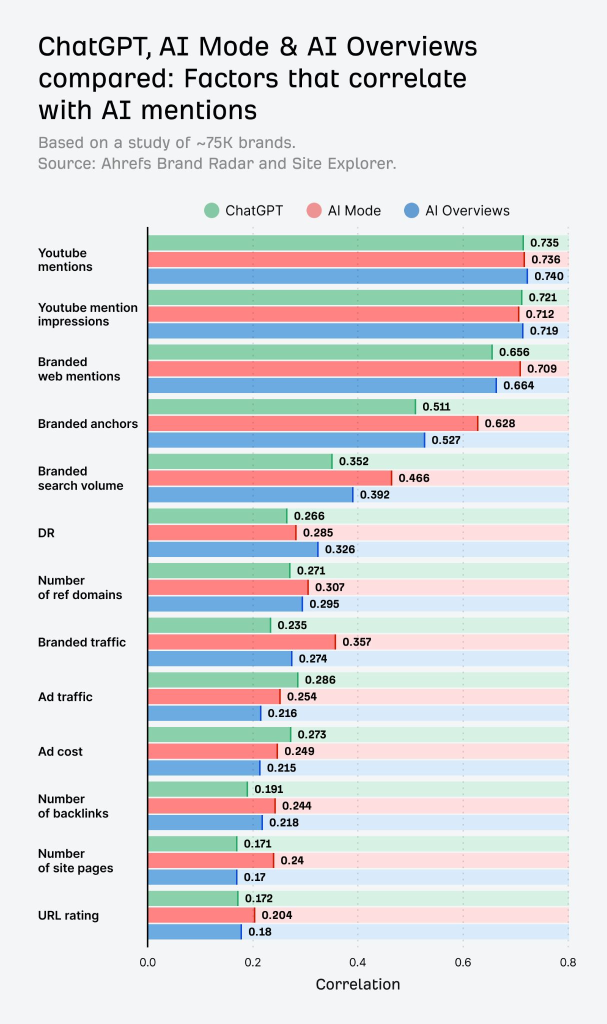
Off-site brand mentions show the strongest correlation with ChatGPT visibility — stronger than backlinks, domain authority, or page count.
YouTube presence is the strongest signal
Ahrefs’ 2025 study of 75,000 brands found YouTube mentions showed the strongest correlation with ChatGPT visibility of any factor tested (~0.737). YouTube mention impressions came in at ~0.717.
Why? The New York Times reported that GPT-4 was trained on over 1 million hours of YouTube transcriptions. YouTube content is baked into the training data.
To increase YouTube mentions: publish on your own channel, sponsor relevant creators, and get mentioned in tutorials and reviews.
For writers, there’s an opportunity here — offer video script repurposing as an add-on service.
Reddit is ChatGPT’s most-cited domain
Reddit ranks #1-5 by citation count, depending on which study you look.
The reason? It’s full of authentic opinions and real conversations — exactly the kind of users look for. And Reddit threads rank high in SERPs.
You can’t game Reddit. The community sniffs out and banishes self-promotion.
The playbook: contribute authentically to relevant subreddits, build your reputation by answering questions without mentioning your product, and think like a PR person to find creative angles for less obvious subreddits.
This is a long game — months of genuine participation.
LinkedIn is an underrated citation source
Semrush’s 2026 study found LinkedIn is the #2 most cited domain across ChatGPT Search, Perplexity, and Google AI Mode — ahead of Wikipedia and YouTube. About 11% of AI responses reference LinkedIn content.
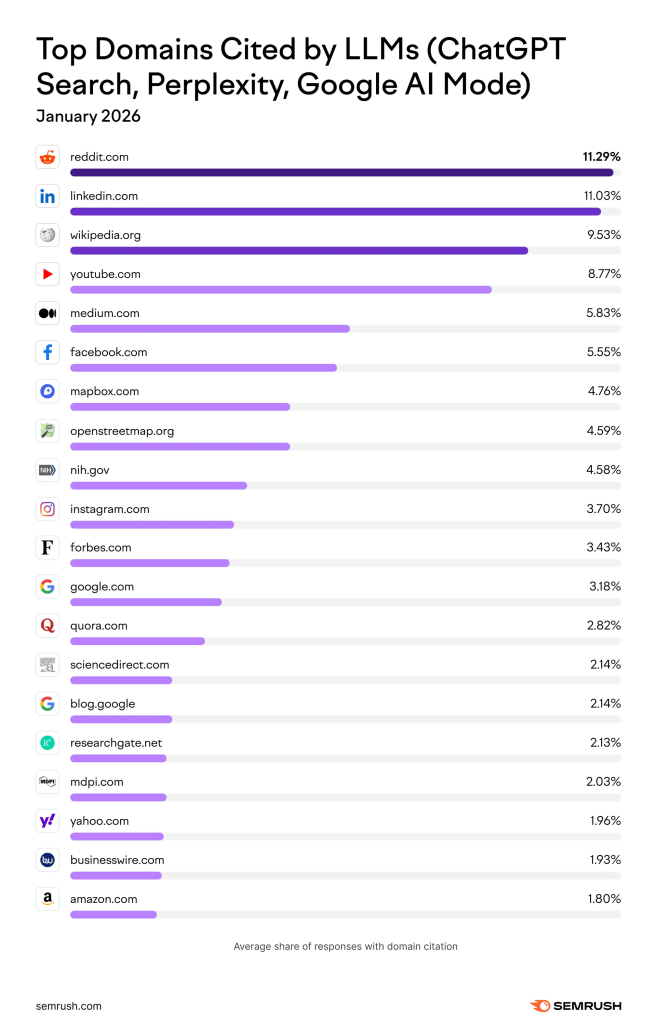
The data shows 95% of cited LinkedIn content is original (not reshares), and 75% of cited authors post 5+ times in four weeks. Frequency and original thought leadership matter more than follower count.
Web mentions matter more than backlinks
Branded web mentions (with or without links) correlated more strongly with ChatGPT visibility than backlinks alone, according to Ahrefs’ 2025 data. LLMs reward consensus — when multiple sources describe a brand as a solution, the model reflects that.
Here’s how to build them:
- Get on the sites ChatGPT already cites. Tools like Ahrefs Brand Radar show which domains are most cited in your niche.
- Target “best of” lists strategically. Glen Allsopp at Ahrefs found that they account for nearly half of ChatGPT citations for product queries.
- Close mention gaps by finding pages that mention competitors but not you.
- Collect reviews on multiple platforms: G2, Capterra, Trustpilot, Yelp.
2. Structure content so ChatGPT can extract and cite it
ChatGPT doesn’t read your content top-to-bottom — it extracts passages to assemble answers. So how you structure content determines whether your insights get cited or skipped.
Front-load your key claims (the “ski ramp” pattern)
Kevin Indig analyzed 1.2 million search results in 2025 and found what he calls the “ski ramp” pattern: 44.2% of all citations come from the first 30% of content. The middle section (30-70%) accounts for 31.1%. The final third: just 24.7%.
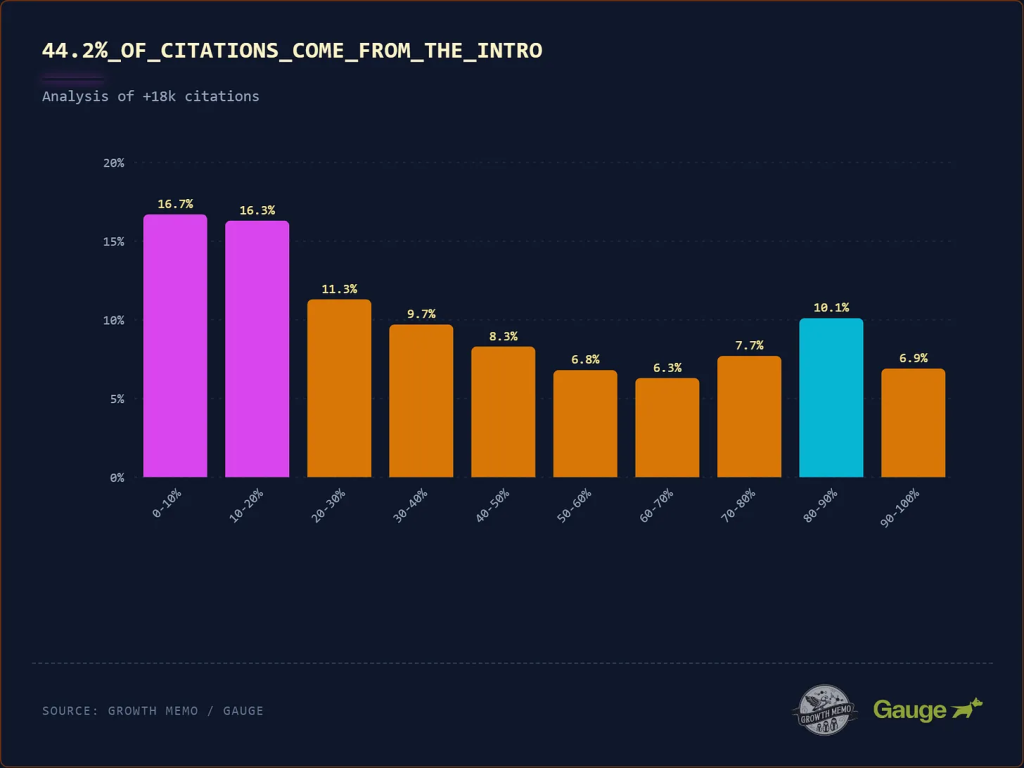
That’s why I use BLUF (bottom line up front) in every section I write. Lead with the answer, then explain. Put your most citable claims in the first third of the article.
Within paragraphs, 53% of citations come from the middle sentence — the one with the highest “information gain,” not necessarily the first.
Use definitive language and name specific entities
Indig’s analysis found definitive phrases like “is defined as” or “refers to” are cited nearly 2x more often than hedging language (36.2% vs. 20.2%).
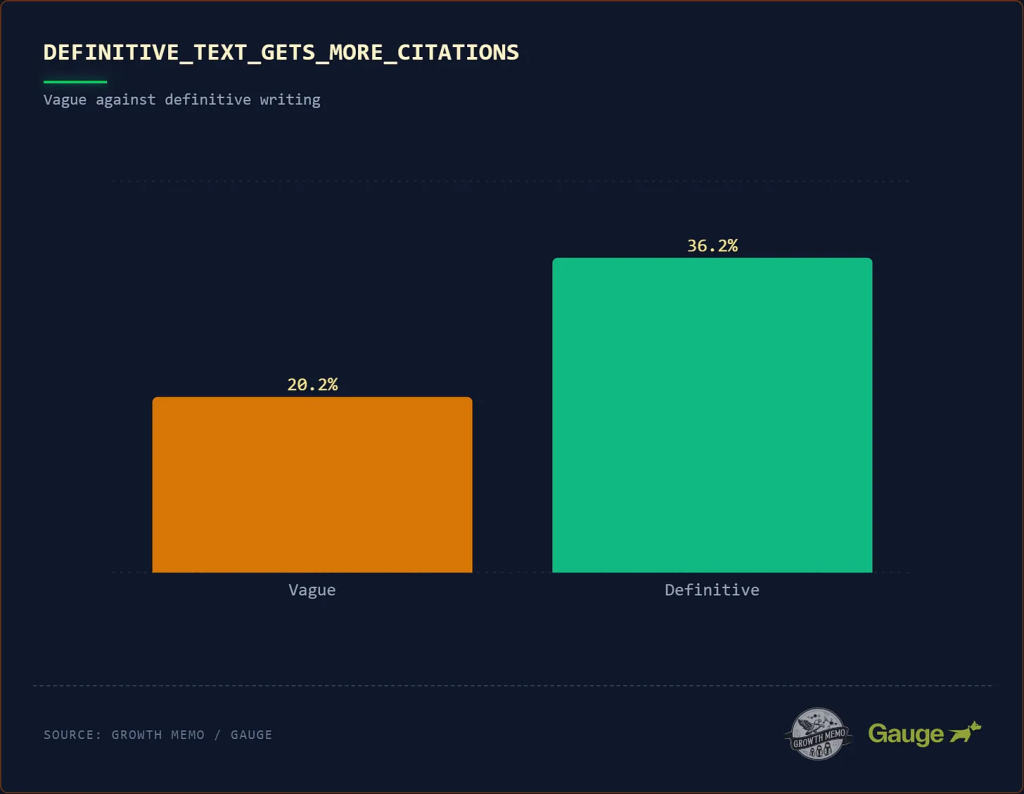
Entity density in cited text runs at 20.6% — roughly 3-4x higher than normal English writing (5-8%). iPullRank’s analysis of 79,000 URL-query pairs found a 292% lift in citation probability when entity density was optimized on mid-tail queries.
Name brands, tools, and people directly. Replace “a leading platform” with “Ahrefs” or “Semrush.”
Use question-based headings and standalone paragraphs
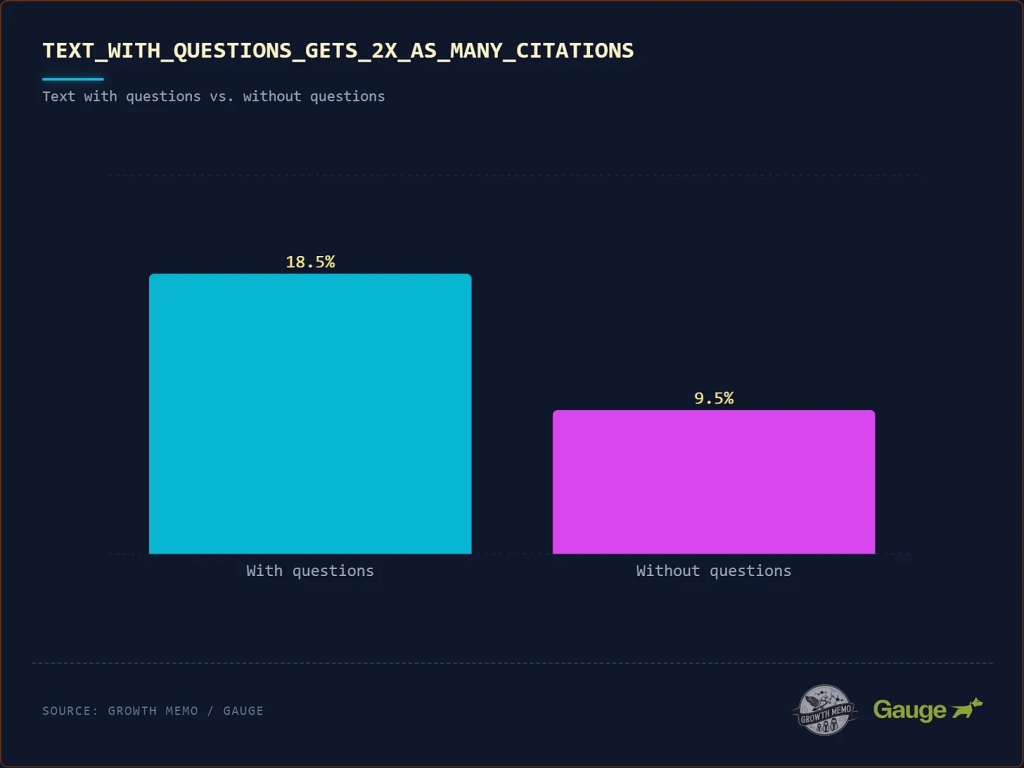
Cited text is 2x more likely to contain a question mark (18% vs. 8.9%), according to Indig’s data — and 78.4% of those questions come from headings. ChatGPT treats question-based H2s as a user query and the following paragraph as the answer.
Write atomic paragraphs — each should make sense if extracted out of context. Add FAQ sections too. Every answer is a self-contained, citable unit.
3. Keep content fresh — ChatGPT has the strongest freshness preference
ChatGPT shows a stronger preference for recent content than any other AI platform.
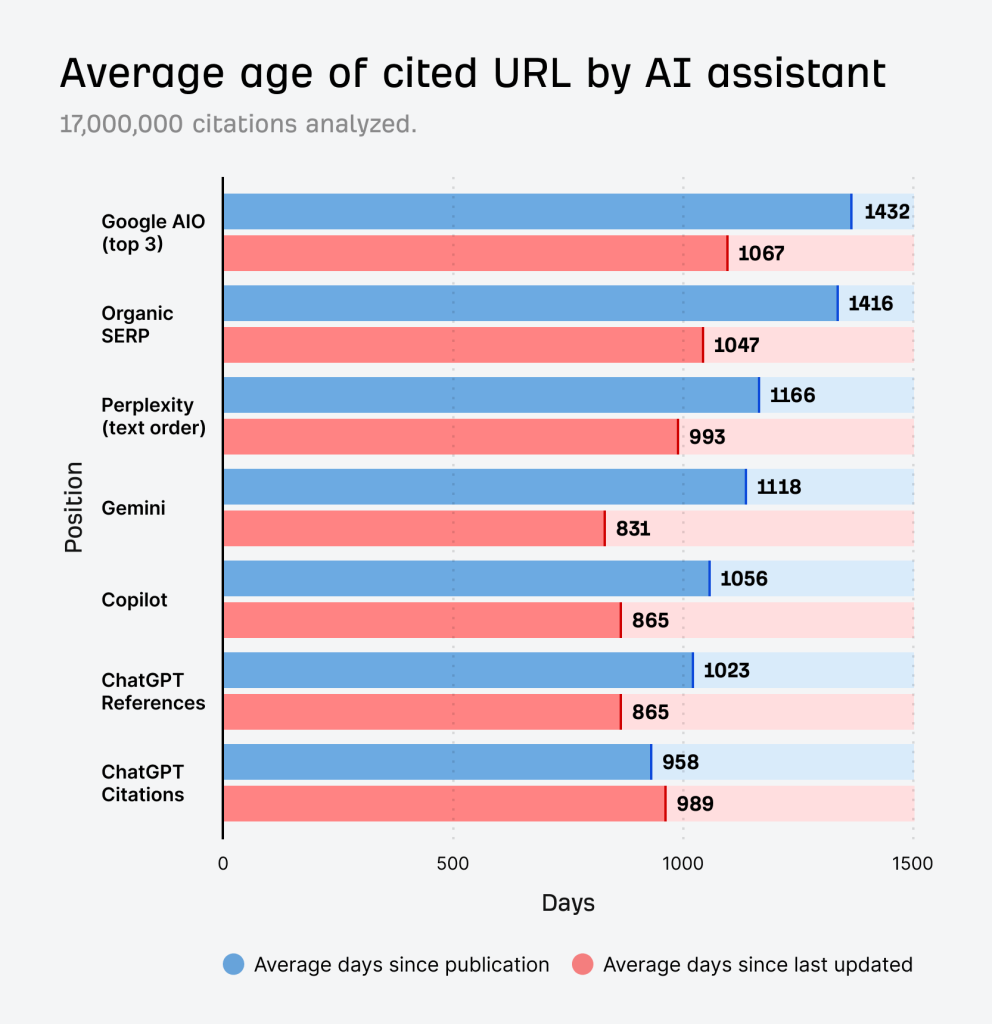
Ahrefs’ 2025 study of 17 million citations across 7 AI platforms found AI assistants prefer content that is 25.7% fresher overall. ChatGPT specifically prefers URLs that are 393 days newer for in-text references and 458 days newer for citations.
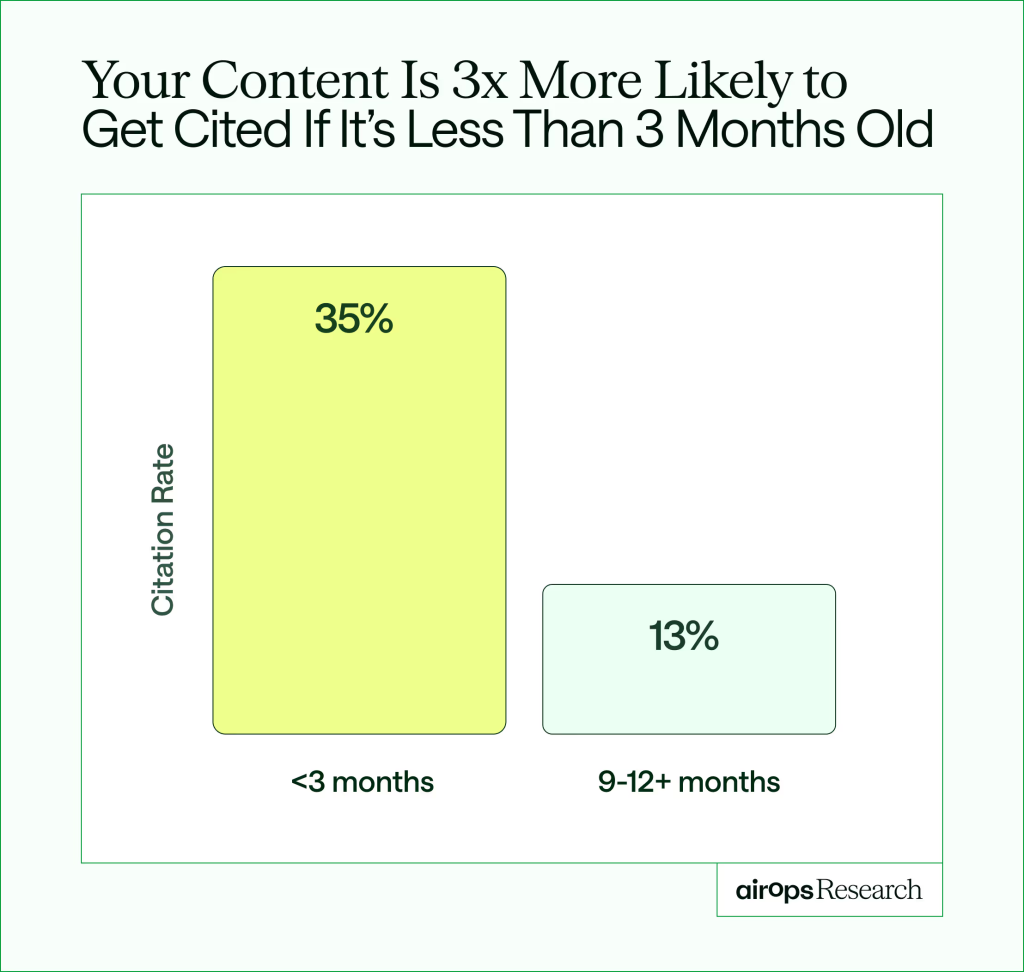
AirOps’ 2026 data backs this up: over 70% of all pages cited by AI were updated within the past 12 months. Pages that go more than three months without an update are over 3x more likely to lose visibility.
What counts as a real update:
- Replace outdated statistics with current ones
- Update screenshots if the UI has changed
- Revise recommendations based on the current landscape
- Add sections for emerging questions
4. Build topical authority with content clusters
ChatGPT visibility isn’t about single pages. It’s about demonstrating deep expertise across a topic.
Publishing interconnected content around a topic signals depth. LLMs can draw from it across multiple queries.
Create pillar pages that cover topics at a high level, supported by articles that explore sub-topics in detail. Interlink the cluster so AI can discover related content.
But don’t confuse volume with authority. Ahrefs’ brand visibility study cited above found the number of site pages correlated at just ~0.194 with ChatGPT visibility. It’s not about publishing more. It’s about publishing content that gets talked about.
5. Strengthen authority and trust signals
ChatGPT prioritizes content that demonstrates genuine expertise, experience, authoritativeness, and trustworthiness (E-E-A-T). But here’s the interesting part: it seems less influenced by traditional authority metrics than other AI platforms.
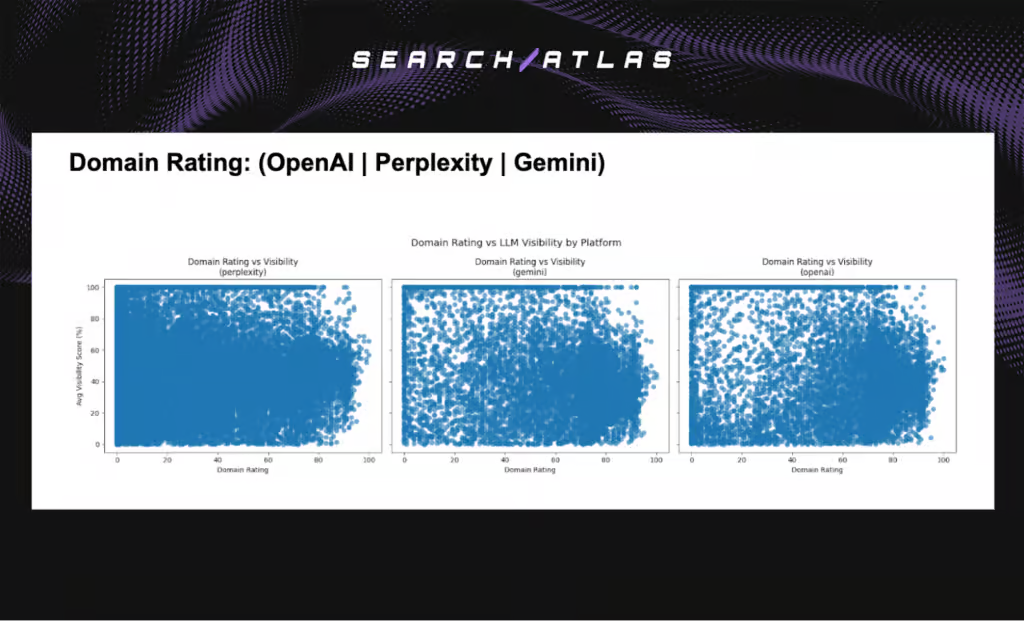
Domain Rating (DR) correlated at just 0.266 with ChatGPT visibility in Ahrefs’ 2025 study — compared to much higher for AI Overviews. A SearchAtlas analysis of 21,767 domains found DR correlations with LLM visibility were actually slightly negative (0.0 to -0.18). Classic domain authority doesn’t carry the weight it does in Google.
What does work:
- First-hand experience demonstrated in the text
- Specific data with source attribution
- Real case studies with verifiable results
- Clear author credentials
Back claims with sourced stats — name the source in the same sentence as the takeaway. Definitive, evidence-backed claims get cited. Hedging doesn’t.
6. Make sure AI crawlers can access your content
If AI bots can’t crawl your site, nothing else in this article matters.
Check your robots.txt for GPTBot (OpenAI’s training crawler) and OAI-SearchBot (OpenAI’s search indexer). If Disallow: / is set under either user agent, your content is invisible to ChatGPT.
There’s a less obvious gotcha.
Ahrefs flagged that Cloudflare has a beta feature called “Instruct AI bot traffic with robots.txt,” which is enabled by default on many accounts. When active, it auto-updates your robots.txt to block AI training crawlers.
The risk: if models can’t learn from your site directly, they learn about your brand from third-party sources instead. You lose control of your narrative.
Use HTML over JavaScript for core content. AI crawlers (except Gemini and Copilot) can’t render JS, which makes JS-rendered content invisible.
And add structured data: FAQ schema, HowTo schema, and Article schema with clear authorship.
One caveat: a SearchAtlas analysis found schema markup has no direct effect on LLM citation frequency — domains with full schema coverage performed no better than those without. But schema still helps traditional search engines index your content, which feeds ChatGPT via Bing and Google.
7. Submit your site to Bing Webmaster Tools
Because ChatGPT Search uses Bing’s index, proper Bing indexing is a foundational step many overlook.
Strong Google rankings don’t guarantee ChatGPT visibility without Bing indexing. The setup is straightforward: verify your site, submit your XML sitemap, monitor crawl errors, and ensure canonical tags and robots.txt don’t accidentally block pages.
I’ve seen practitioners report improved ChatGPT visibility after proper Bing setup — in some cases, it was the single change that got their content cited for the first time.
How to track your ChatGPT visibility
There’s no native console, no position tracking, and responses change every time. But you can track ChatGPT visibility through three approaches: referral traffic in GA4, systematic manual testing, and dedicated AI visibility tools.
- Track referral traffic. Set up GA4 filters for chatgpt.com and openai.com referral sources. This captures visitors who click through from ChatGPT citations. Note that referral data has had tracking issues — Ahrefs documented periods where ChatGPT wasn’t properly sending it.
- Test manually, but systematically. Run the queries you want to appear for in ChatGPT. Test multiple times across different sessions — single queries are unreliable. Test both with and without ChatGPT Search enabled, as Seer Interactive found they surface different results.
- Use dedicated tools. Ahrefs Brand Radar tracks brand mentions and citations across AI platforms and identifies mention gaps vs. competitors. Semrush AI SEO Toolkit, Surfer AI Tracker, and Profound monitor citation trends over time.
What “ranking” in ChatGPT really means
Most articles about ChatGPT optimization overstate what’s controllable. Before you invest significant resources, here’s what I’d keep in perspective.
The manipulation problem is real — and it probably won’t last
Wil Reynolds of Seer Interactive documented how agencies are gaming ChatGPT: creating “best SEO companies” lists on their own sites, ranking themselves #1, and cross-listing among agencies. He calls it “2005 tactics in a 2025 world.”
These tactics are working today, especially in ChatGPT Search (Bing-powered results). But Reynolds’ stance is clear: “I’m willing to lose some LLM visibility to maintain my brand.”
And there’s evidence the cleanup is already starting. Lily Ray documented multiple SaaS brands with 190-340 self-promotional listicles losing 34-49% of their organic visibility in January-February 2026.
The historical parallel: manipulative link building worked in early Google until the Panda and Penguin updates eliminated it. The same correction is underway.
Not every business needs to prioritize this right now
ChatGPT volume is still a fraction of organic search, and the conversion advantage varies enormously by industry. Know your category before investing heavily.
If you already produce strong content with a solid brand presence, you’re likely appearing in ChatGPT responses already. Measure first, optimize second.
If you’re starting from zero, traditional SEO and brand building remain the foundation. ChatGPT optimization extends it — it doesn’t replace it.
And here’s the reassurance: the tactics that increase ChatGPT visibility — brand mentions, fresh content, structured writing, genuine authority — also improve organic search, social sharing, and conversion. The investment is rarely wasted, even if ChatGPT’s mechanics change.
Final thoughts
The brands showing up in ChatGPT aren’t the ones that cracked a secret algorithm. They’re the ones people talk about on YouTube, Reddit, in industry publications, and on review sites. They publish fresh, specific, citable content. And they’ve built a presence on the platforms ChatGPT already trusts.
The biggest risk isn’t failing to “rank” in ChatGPT. It’s chasing AI optimization at the expense of the fundamentals that make content work everywhere.
This landscape will change. The tactics may shift. But the foundation — build a strong brand, write content worth citing, and show up where your audience already is — won’t.
Looking for a writer who knows how to make content rank in AI search? Get in touch.
FAQ
How does ChatGPT optimization differ from traditional SEO?
Traditional SEO focuses on ranking pages for clicks in Google’s SERP. ChatGPT optimization focuses on getting your brand mentioned or your content cited in generated responses. Brand mentions matter more than backlinks, content freshness has an outsized effect, YouTube presence is a major factor, and there’s no equivalent of Google Search Console to monitor performance.
Does ranking on Google help with ChatGPT visibility?
A correlation exists, but it isn’t guaranteed. Ahrefs found pages with zero Google traffic that were cited thousands of times by ChatGPT because they were fresh and relevant. The best approach: focus on ChatGPT-specific factors like brand mentions, freshness, and extraction-friendly content structure alongside traditional SEO.
What is the difference between a ChatGPT mention and a citation?
A mention is when your brand name appears in ChatGPT’s generated text. A citation is when ChatGPT links to your specific page as a source.
Both matter. Citations give you trackable referral traffic, and mentions increase brand awareness and shorten the customer journey.
What domains does ChatGPT cite most frequently?
Profound’s 2025 analysis of 700,000+ conversations found Wikipedia appears in 18% of cited conversations (5% of all citations), Reddit in 13% (3%), followed by Reuters and NIH at roughly 4% each. The top 10 domains capture only 12% of all citations. The distribution is wide but unequal — every brand has a chance, but few win big.
What is answer engine optimization (AEO)?
AEO is the practice of optimizing content to appear as direct answers in AI-powered search tools like ChatGPT, Perplexity, and Google’s AI Overviews. It’s an evolution of SEO adapted for answer engines.
The core difference: SEO targets page rankings for clicks, while AEO targets inclusion in synthesized answers. For a full breakdown of on-page SEO tactics, see my AI search optimization guide.
