When I first wrote this piece in September 2025, there was a lot of data on how AI models work and how to optimize content to increase citations and mentions.
But there were a lot of gaps, too.
Since then, new studies have filled many of those gaps. Many of the initial claims have been confirmed.
SEO is still the foundation, AEO — an extra layer. But the extra layer is more complex than many initially thought.
In the article, I unpack everything I’ve learned about AI search. The established SEO principles we’ve been following for at least a few years, and the new tactics grounded in the latest research.
You will learn how content writers should structure content and signal authority so AI systems trust it and can easily cite it. I also share higher-level strategies I would implement as a content manager or an SEO.
How to Optimize for AI: Key Takeaways
To get your content cited in AI Overviews and generative search engine results:
- Write in standalone sentences and paragraphs that make sense out of context.
- Use clear H2/H3s, lists, and tables so AI can easily understand and extract your content.
- Organize your content as answers to reader questions and embed images, charts, and videos — especially YouTube.
- Back up claims with stats, expert quotes, and original insights that signal your authority and expertise.
- Cover topics from multiple angles to build topical authority, update content regularly, and promote it across different channels and 3rd-party platforms.
- Make sure you’re not blocking AI bots from accessing your website and implement schema markup to help understand it.
Prefer to watch?
How Do You Structure Content for Easy AI Extraction?
For starters, make your writing clear and easy to scan, so AI can easily lift answers from your text.
Here are a few practical ways to do it.
Divide text into independent semantically complete sections
To make your content easier to access by AI crawlers,
- Keep your paragraphs short — 1-5 sentences.
- Tackle each idea in a separate paragraph — one at a time.
- Ensure your paragraphs make sense even when taken out of context.
- Write in quotable, standalone sentences.
AI engines don’t read articles top-to-bottom — they break them into small fragments we call “chunks” and piece them together to answer user questions.
So, dividing your text into short, self-contained sections increases the odds of getting quoted.
Use definitive language
Write in direct, declarative sentences (“X is Y”) instead of hedged or vague phrasing. AI engines cite confident, definitional language at nearly twice the rate of uncertain language.
In a February 2026 analysis of 11,022 ChatGPT citations, Kevin Indig found citation winners were almost twice as likely to use definitive language than losers — 36.2% vs. 20.2% (statistical significance p < 0.0001).
Definitive Text Gets More Citations
Vague against definitive writing
Source: Growth Memo / Gauge

The pattern held across topics: sentences built on definitive verbs (“is,” “are,” “refers to,” “is defined as”) got picked up; hedged or filler openings got skipped.
Compare:
❌ “AEO is generally considered to be a relatively new approach that involves optimizing content so AI search engines may cite it in their answers.”
✅ “AEO is the practice of optimizing content so AI search engines cite it in their answers.”
Same meaning. The first hedges with “generally considered,” “relatively new,” “may.” The second states it directly.
Use a clear H2/H3 hierarchy and headings that match user queries
Breaking the articles into clear H2/H3 sections with descriptive headings makes it easier for AI bots to understand content structure and relationships between ideas — and find relevant chunks.
AirOps data from late 2025 backs this up: pages with sequential heading structures are cited 2.8x more often than pages with fragmented or inconsistent hierarchy. 87% of pages cited in ChatGPT use a single H1, and nearly 69% follow a logical heading hierarchy throughout.
AI Search Raised the Bar for Content Structure
Pages cited by ChatGPT are more likely to use structural best practices than pages that only rank in Google.
Source: AirOps, 2026 State of AI Search report
A recent study conducted by AirOps and Kevin Indig (April, 2026) found that the optimal number of headings is 7-20.
The same study found that pages where the H2-H4 headings closely match user queries (0.90+similarity match) were cited 41% of the time. Pages with weak matches only 29%.
Heading Match Drives AI Citation
Pages with a heading that closely matches the user’s query (0.90+ similarity) are cited 41% of the time vs. 29% for weak matches. Better heading match, more citations.
Source: AirOps Research — 16,851 queries, 353K pages
That’s why I’ve divided this article into three main H2 sections, each on a different aspect of GEO (structure, authority, strategy/technical SEO) + Conclusion and FAQs
Within each H2 section, we have 3-5 H3 headings, each dealing with one idea, for example, chunking and heading hierarchy.
Each heading summarizes the main section takeaway. “Use clear H2/H3 hierarchy and dense headings to guide the AI bots,” as opposed to “Use clear headings.”
These aren’t new ideas. Using headers to make articles skimmable/scannable has been a good SEO practice since I can remember.
Structure your content to answer reader questions
AI systems are more likely to cite your content if you frame it as answers to reader questions.
After studying 1.2M search results, Kevin Indig, the founder of Growth Memo, discovered that cited text is 2x more likely to contain a question mark, and 78.4% citations with questions come from headings!
Text With Questions Gets 2x As Many Citations
Text with questions vs. without questions
Source: Growth Memo / Gauge
The question-answer format mirrors how readers interact with AI assistants like ChatGPT or Perplexity. People don’t search for keywords — they ask questions.
So, not “AI search optimization” but “How do I optimize my website for AI search?”
For example, you could:
- Include questions naturally in your section copy
- Turn subheadings into questions
- Add an FAQ section at the end of the article
How do you find the exact questions readers frequently ask?
Try Ahrefs Keyword Explorer, Neil Patel’s Answer the Public, People Also Ask in Google, and Reddit.
However, the best sources of genuine customer questions are customers themselves — their support tickets, website inquiries, or sales calls.
Front-load the most important information
Include the most important information at the beginning of your article, and summarize it at the end.
Kevin Indig’s analysis of 1.2M ChatGPT responses (February 2026) found 44.2% of all citations come from the first 30% of text, 31.1% from the middle 30-70%, and only 24.7% from the final 30%.
44.2% of Citations Come From the Intro
Analysis of +18k citations
Article depth (position of citation)
Source: Growth Memo / Gauge
- Include the key takeaway — or the bottom line — in the introduction.
- Cover key insights, data, or product features in the top third of your article
- In listicles, place your product or service in the top positions
- Open sections with the main idea and dig deeper in the following sections
- Reinstate the main ideas in the conclusion
The best part?
Providing clear, upfront answers improves readability for humans. This translates into better SEO performance. If the reader can easily find what they need, they’re more likely to stay on the page. This sends signals to Google that the search result is relevant for their query.
Add lists, tables, and step-by-step guides
Presenting information in structured formats like lists and tables makes your content easier for AI to extract and reuse. Instead of parsing dense text, LLMs can quickly lift whole sections directly into their answers.
AirOps (2025) found that nearly 80% of pages cited within ChatGPT include lists to structure key information.
Here are three practical ways to embed tables and lists in your articles for higher AI search visibility:
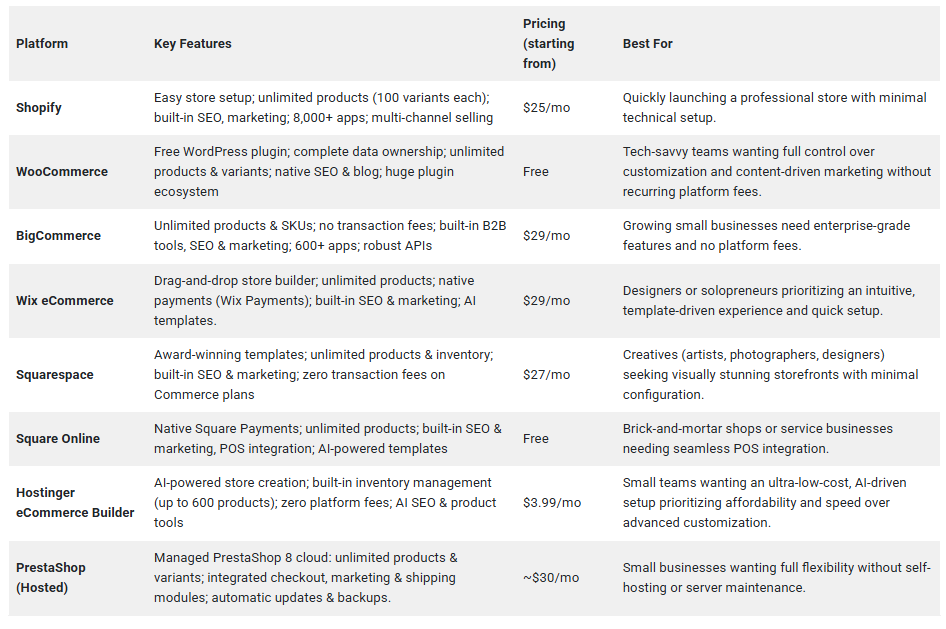
- Create a table summarizing key product features, pricing details, and overall rating at the beginning of your listicle.
- Summarize the key article takeaways in a tl;dr section at the beginning or the end of the article.
- Clearly label sections in your how-to guides with “Step 1,” “Step 2,” “Step 3,” etc.
Write meta descriptions that advertise the page content
Unlike in traditional SEO, meta descriptions do affect page visibility in AI search.
Most AI search platforms fetch pages in real time. They don’t maintain a long-term index the way Google or Bing does. So when an LLM reviews your search result, it reads the URL, title, and meta description to make a decision: is this page worth requesting and using in my response?
As Mike King from iPullRank explained in an interview with Rand Fishkin (February, 2026): “your metadata is the advertisement to the LLM to determine whether or not they’re going to use your content.”
To optimise for this:
- Summarise the page’s “atomic units” of information clearly so the AI recognises it as a high-value source.
- Highlight extractable data — signal that the page contains concrete stats, comparisons, or specific answers. LLMs bias toward content with high extractable value.
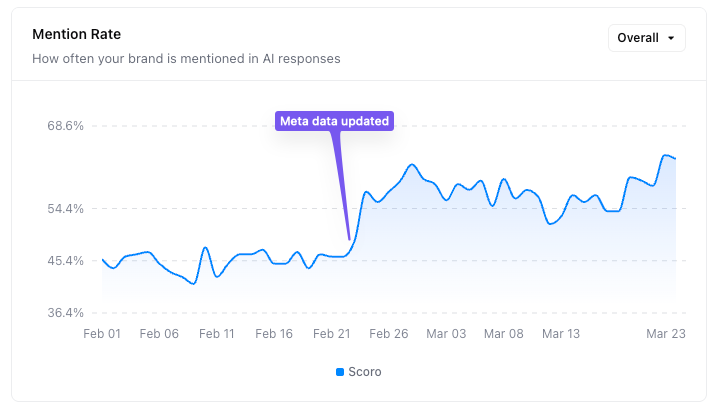
Sean Collins, the Head of Content at Scoro, tested this in March 2025. He updated titles and meta descriptions across ~100 URLs, rewriting all the metadata in plain, natural language.
The result: a noticeable spike in Scoro’s AI mention rate across AI Mode, Gemini, and Perplexity — jumping from roughly 45% to 55–60%.
Use highly semantic URL slugs
URL structure has a very small correlation with rankings in traditional Google search. In AI search, it’s a more significant signal. LLMs read the text in a URL string to judge its relevance to the user’s prompt.
Research from Profound found that URLs with high semantic similarity to a query receive 11.4% more citations. URLs that are highly specific to the user’s intended question see a further 5% citation increase.
In practice, this means moving away from the traditional SEO habit of shortening slugs to a single target keyword. Instead, use longer, descriptive slugs that mirror the full title of the article — giving the AI maximum semantic context.
As Mike King put it: “The language model is going to read that text and be like, oh yeah, this is highly relevant to that user’s prompt. So I would, moving forward, probably have longer slugs… the full title of the article rather than reducing it to just the target keyword.”
Caveat: Apply this to new content only. Don’t change existing URLs, as this can damage your organic search performance.
How Do You Build Authority & Trust Signals Into Your Copy?
LLMs, just like traditional search engines, cite information that is authoritative, trustworthy, and demonstrates genuine expertise and experience.
Let me walk you through a few ways to show it in your text.
Replace vague claims with sourced stats
Back up your claims with stats from reliable and authoritative sources.
So instead of “AI is popular,” write “20% of Americans use AI tools 10 times+ a month, recent SparkToro data shows.”
Semrush has found that content with specific and referenced statistics is more likely to be cited than vague statements.
Use quotes and clearly attribute them in the text
Embedding expert quotes is another way to communicate authority.
A 2024 study led by Pranjal Aggarwal found that including “citations, quotations from relevant sources, and statistics can significantly boost source visibility, with an increase of over 40%….”
See what I’ve just done here?
Here’s a trick: Whether you’re quoting stats or experts, name sources directly in the same sentence. Like above: “A 2024 study led by Pranjal Aggarwal found…” or “….recent SparkToro/Datos data shows.”
Attributing data to sources like this makes a clean, standalone quote AI can cite directly.
Add unique insights from original research or case studies
Including unique insights, for example, from original research or case studies, increases your AI visibility.
This works in 3 ways:
- Proprietary data or unique angles make you stand out and give LLMs something they don’t know. This increases the odds they pull information from your URL.
- When other publications cite your new brand, they also mention your brand, which reinforces its authority. Mentions = higher AI search visibility.
- Organic search engines reward originality, and organic performance underpins AI search performance.
Demonstrate E-E-A-T in the article
In your content, show that you have the expertise and experience to write about the topic to increase your credibility.
Here are a few ways to do it:
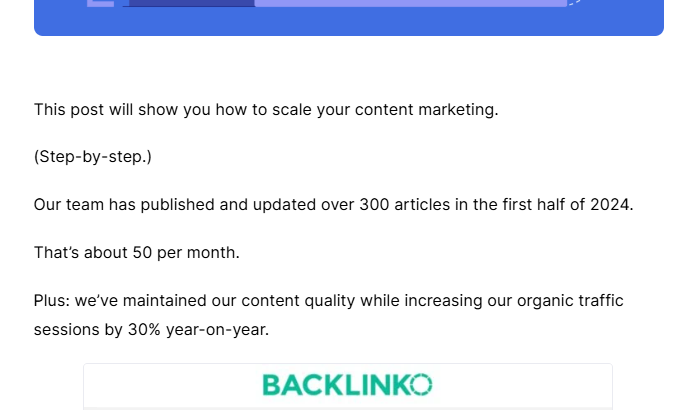
- Highlight your experience and achievements in the introduction. Like Michael Ofei in the Backlinko intro below (experience: published/updated 300 articles, expertise: 30% increase in organic traffic)
- Illustrate with examples from your personal experience. For instance, in the article about project management certifications for Paymo, I shared my experiences getting different qualifications and studying with different providers.
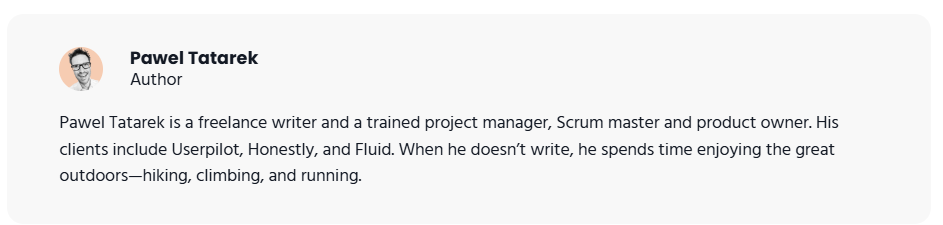
- Optimize your author bio to showcase your credentials. My bio for Paymo highlights my project management background.
- If you’re quoting SMEs, establish their authority within the text. For example:
✅ “Jane Smith, a messaging expert with a decade of experience working with early-stage SaaS companies, emphasizes the importance of…”
❌”Jane Smith emphasizes the importance of…”
6 High-Level AEO Best Practices
Here are a few strategic plays that can boost coverage by AI-powered search engines. Things content writers don’t do, but content managers, strategists, or SEOs do.
1. Publish BOFU listicles and comparison articles
As mentioned, LLMs find it easier to retrieve information from content in a list format. This includes listicles, like “16 best B2B SaaS content writers” or “7 top Ahrefs alternatives,” or comparison articles, like “Asana vs ClickUp.”
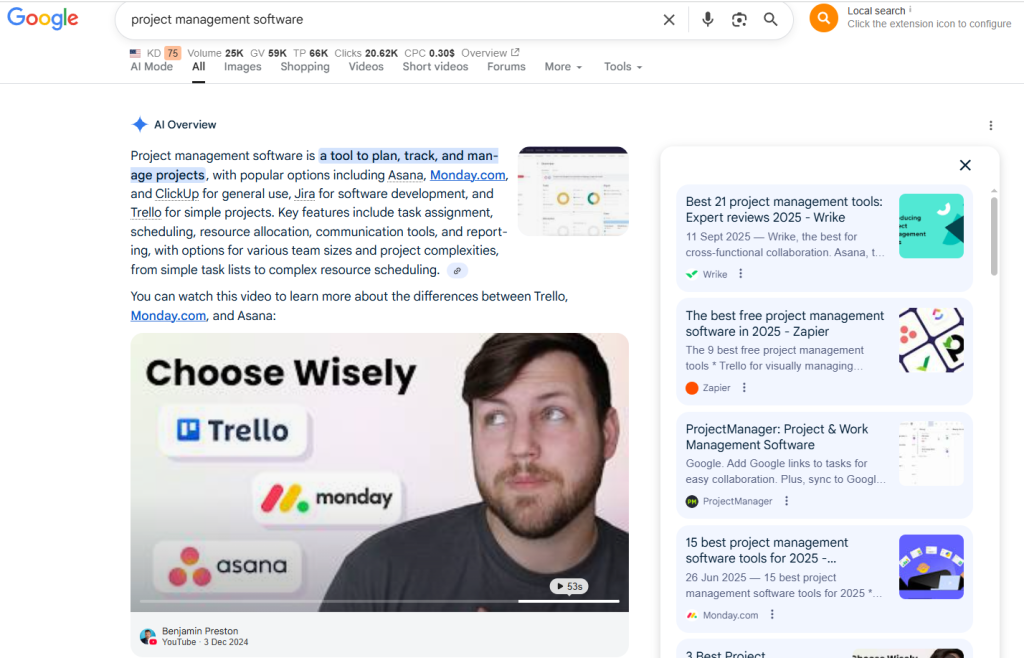
When users ask AI assistants for recommendations, LLMs can directly pull information about your product or service from such articles.
Ahrefs discovered that 7.06% of AI traffic goes to “best” pages, 5.5% to “top” lists, and 4.88% to X vs. Y head-to-head comparisons. Another Ahrefs study (December 2025) found that “top x” listicles made up 43.8% of all ChatGPT citations.
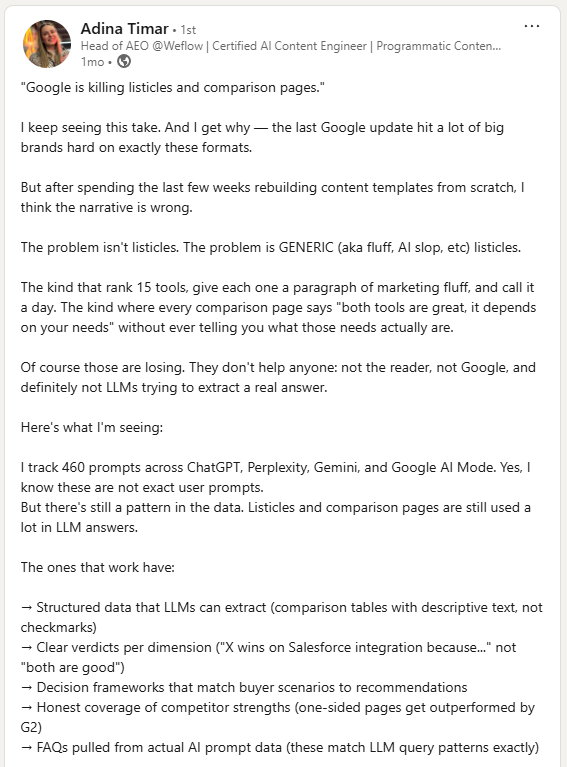
Despite Google losing patience with companies overusing the listicle format, well-written, helpful list blog posts still perform well in organic and AI search results, as explained by Adina Timar in her LinkedIn post:
2. Update content regularly
Refreshing your content regularly increases the odds of getting cited.
AirOps’ 2026 State of AI Search report makes the case convincingly: pages that go more than three months without an update are over 3x more likely to lose AI citations compared to recently refreshed pages. Over 35% of pages cited by ChatGPT were updated within the last three months, and over 70% within the last year.
Recently Updated Pages Earn The Most Citations
Over 70% of pages cited by ChatGPT were updated within the past 12 months.
Update frequency of pages cited by ChatGPT
Source: AirOps, 2026 State of AI Search report
For commercial queries — when users are comparing options and making buying decisions — the bar is even higher.
About 83% of commercial citations come from pages updated within the last year, and in fast-moving industries like SaaS, finance, and news, pages older than three months see steep drops in citation likelihood.
Faster Industries Demand Faster Content Cycles
How often do you need to refresh content to stay visible in AI search?
Industries
- SaaS
- Finance
- News
Freshness Window
<3 MonthsIndustries
- Real Estate
- E-Commerce
- Manufacturing
Freshness Window
3–6 MonthsIndustries
- Travel
- Lifestyle
- Healthcare
Freshness Window
6–9 MonthsIndustries
- Research
- Non-profit
- Education
Freshness Window
<12 MonthsSource: AirOps, 2026 State of AI Search report
Updating your content frequently means it can answer questions about recent developments that LLMs might not be able to answer based on their training datasets.
That’s if you do it properly, not just change the year in the title.
My content refresh process consists of 13 steps and includes replacing stats with current ones, adding new features to product descriptions, amending the screenshots, filling content gaps, embedding new keywords, and improving structure and readability.
And AI search optimization, of course.
How To Refresh Your Content [In 13 Steps]
Audit Content
Identify articles to refresh
Analyze SERPs
Check intent and ranking patterns
Find Content Gaps
Compare with top competitors
Update Information
Replace outdated data and examples
Update Visuals
Refresh images and media
Embed Keywords
Add new semantic terms naturally
Improve Flow
Enhance readability and structure
Tweak Intro
Align with refreshed content
Update Conclusion
Rewrite CTAs to match intent
Rewrite Title
Reflect new content and signal freshness
Fix Linking
Internal and external links
Update Metadata
Meta description and schema
Refresh Date
Update “last modified” date
3. Publish articles covering the topic from every angle to build topical authority
Publishing in-depth content that covers the topic from all angles establishes you as a go-to source in the subject matter. As your topical authority grows, so do your chances of getting cited.
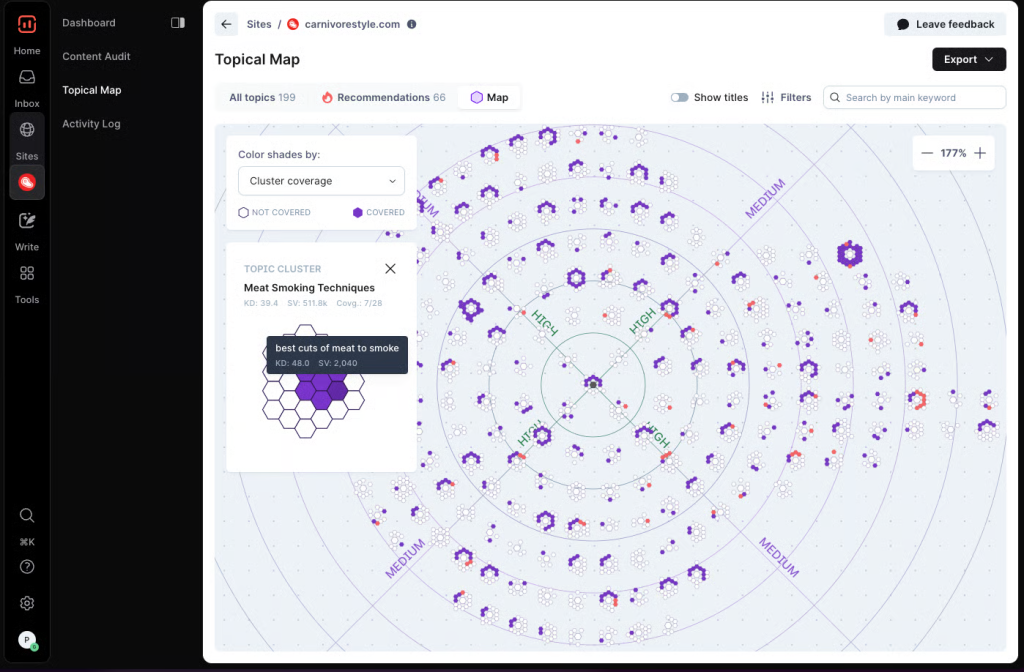
Here’s how to build your topical authority:
- Create pillar pages that cover the main topic at a high level. For example, the ultimate guide to SaaS user onboarding.
- Add supporting articles to explore sub-topics in detail. For instance, “best SaaS user onboarding practices”, “top user onboarding KPIs to track,” or “best user onboarding tools.”
- Interlink the cluster so AI (and readers) can easily discover related content.
4. Invest in content promotion to popularize your ideas and earn brand mentions
The more people share your ideas or talk about your brand, the likelier they are to surface in generative search results.
Remember how I suggested you add original insights to your articles to boost their organic rankings?
LLMs don’t work like traditional search engines. They don’t reward originality; they reward consensus, as Despina Gavoyannis from Ahrefs explains in her article.
So, the median, not the outliers. The most common survey response, not the most contrarian one. The greatest hits, not the hidden gems that only connoisseurs know.
In practice, this means that posting new ideas on your website alone may not be enough to get them into AI answers. They need to go mainstream.
An Ahrefs study of 75,000 brands found that YouTube mentions show the strongest correlation with AI visibility (~0.737), surpassing even branded web mentions (~0.66-0.71) — which previously topped the list.
This holds across ChatGPT, AI Mode, and AI Overviews. In other words, if people are producing and watching videos about your brand, AI platforms take that as a strong signal you’re worth talking about.
ChatGPT, AI Mode & AI Overviews Compared: Factors that Correlate with AI Mentions
YouTube mentions and branded web signals show the strongest correlation with AI visibility across all three platforms.
Source: Ahrefs Brand Radar & Site Explorer, study of ~75K brands
Web brand mentions remain the second-strongest signal.
AirOps’ 2026 report found that about 85% of brand mentions in AI answers originate from third-party pages rather than owned domains. And 48% of all AI search citations come from community and user-generated platforms like Reddit, YouTube, LinkedIn, and Wikipedia.
You can promote your content via:
- PR campaigns
- Guest features in trusted industry publications
- Social media (Share it on LinkedIn, X, Instagram, Pinterest – wherever your customers hang out)
- Q&A platforms like Reddit and Quora (both are high up among most cited sources)
- Multimedia assets like YouTube and podcasts
5. Implement schema markup to make your content machine-readable
Adding schema markup to your page increases the chances of being cited because structured data makes your content easier for AI systems to understand.
Schema markup is like a secret code. Invisible to readers but not LLMs. It tells them who created the page, how the page is structured, and what kind of information it includes.
AirOps found that about 61% of cited pages use three or more schema types, and pages with 3+ schema types have a 13% higher likelihood of being cited. FAQschema appears in 10.5% of cited pages, helping models map answers to queries more directly.
The latest AirOps study also showed schema markup improves ChatGPT visibility by 6.5%.
Schema Markup Does Give You The Edge
↑6.5pp
Citation Rate Advantage
Top Schema Types by Citation Rate
Source: AirOps Research — 16,851 queries, 353K pages
The most useful types of schema for AI visibility are:
- Breadcrumblist schema: Gives bots the precise hierarchical structure and navigational path of a page.
- FAQPage schema: Highlights direct Q&As.
- Organization schema: Tells bots about your business, for example, address, location, website, or social media profiles.
- WebSite schema:
- Product schema: Details about your product, like price, availability, or ratings.
- HowTo schema: Structures step-by-step guides.
- Article schema: Clarifies title, author, date, and topic.
6. Make sure AI crawlers can access your content
If AI bots can’t crawl your pages, your content won’t be included in their answers — no matter how well it’s optimized.
Here’s what to check:
- Allow key AI bots like GPTBot, ClaudeBot, GeminiBot, and PerplexityBot in
robots.txt. - Use HTML instead of JavaScript. AI systems — except Gemini and Copilot — can’t render JS, so the content is invisible.
- Avoid bot-blocking tools that might block AI crawlers.
- Keep page response times fast.
Rank in AI search results with well-structured and authoritative content
Generative engines like Perplexity, Gemini, and Google’s AI Overviews don’t reward fluff. They reward content that’s tightly structured, packed with evidence, and clearly written by someone who knows what they’re talking about.
Which is exactly what we’ve been doing to optimize for organic search for a while.
So if you have an established SEO foundation, there’s nothing to fear. Just need to adapt the playbook a bit.
The customer acquisition funnel needs bigger adjustments.
- Organic search will play a smaller role in the future, so the ROI on traditional SEO content will be lower (we still need to produce and update it to feed the bots).
- Building AI visibility requires presence across multiple channels, so content repurposing is getting even more important.
Looking for a writer who knows how to make content rank in AI search?
I help SaaS companies and agencies publish GEO-ready articles that drive visibility, traffic, and conversions.

Pawel Tatarek
Freelance B2B SaaS Content Writer & Editor
Answer Engine Optimization FAQs
Let's finish with a few frequently asked questions about AI search optimization.
What is AEO?
AEO stands for Answer Engine Optimization, and it refers to practices aimed at increasing visibility in AI-driven search results (AI Overviews, ChatGPT, Gemini, Claude, Perplexity, etc.).
Other acronyms that people use for GEO include:
- LLMO - Large Language Model Optimization
- AIO - AI Engine Optimization
- GEO stands for Generative Engine Optimization
- AISO - AI Search Optimization
Why is it important to optimize your content for Gen AI search?
Optimizing your content for AI search is important because getting cited by AI assistants drives business growth.
Generative AI is changing how people discover and consume information. At the end of 2024, Google's market share fell below 90% for the first time since 2015! And one possible explanation is that more and more people use AI assistants instead of Googling.
This includes product and brand research. If a product or brand doesn't surface in ChatGPT, Perplexity, or Gemini responses, customers won't know about it.
The process is likely to accelerate as new generations of AI-native customers enter the market.
That's why businesses — including your competitors — are already focusing on GEO to future-proof their funnels.
Do AI search visitors convert better?
Current evidence suggests that AI visitors convert better than organic traffic. Semrush estimates that traffic from AI search is worth 4.4x more than traffic from traditional organic search.
Ahrefs has reported even more striking results: AI search visitors convert at a 23x higher rate than organic visitors. In June 2025, just 0.5% of Ahrefs' traffic comes from AI search, yet it drives 12.1% of their signups — making it their highest converting channel at over 10% CVR.
AI search visitors are more likely to convert because they arrive on your site already educated and ready to act. Generative AI tools don’t list links but synthesize answers. By the time a user clicks through to your page, they’ve already seen your product or brand positioned as the solution to their problem.
What sources get cited in AI Overviews and AI answers?
AI Overviews and AI search engines pull information from authoritative sources they trust. However, the exact mix depends on the specific LLM and keeps changing constantly.
- In AI Overviews, YouTube (~23.3%), Wikipedia (~18.4%), and Google.com (~16.4%) are the top 3 domains, followed by Reddit and LinkedIn, based on Surfer's analysis of 36 million AI Overviews and 46 million citations (March-August 2025).
Top 20 Domains Cited in AI Overviews
YouTube, Wikipedia, and Google own the top 3 — user-generated content dominates the rest.
Source: Surfer, analysis of 46M citations across 36M AI Overviews (March–August 2025)
- Reddit, Wikipedia, and Investopedia were the most cited domains in ChatGPT answers in Jan-Feb 2026, according to OtterlyAI.
- In Perplexity, Reddit, LinkedIn, NIH, Microsoft, and Google were the top cited sources in the July-October 2025 period, based on Semrush data.
- Across all AI platforms combined, Writesonic's analysis of 2.4 million domains found the top 5 most-cited are Reddit, Wikipedia, YouTube, Google, and LinkedIn. Seven of the top 10 are user-generated content platforms.
- A recent Semrush study (March, 2026) found LinkedIn to be the second most cited source across all ChatGPT, Google AI Mode, and Perplexity.
Top Domains Cited By LLMs (ChatGPT Search, Perplexity, Google AI Mode)
January 2026
Average share of responses with domain citation
Source: Semrush
Two caveats: First, the pages LLMs cite vary across industries. Also, the rankings are super volatile. What's true one month may not be true the next.
Is it more important for LLMs to cite your brand or your content?
Both getting your brand and your content cited by LLMs are important.
Getting your brand mentioned in AI answers is important because it helps users discover your brand when they're researching products or services.
Getting your content quoted by the AI systems matters when it directly mentions your product or brand. That's how you shape how they are described in AI answers.
Otherwise, the impact is negligible because searchers rarely check out the pages that LLMs cite.
How to track visibility in AI search?
The simplest way to track AI search visibility is to manually search for product-related queries in Perplexity, ChatGPT, Gemini, and Copilot. You'll see whether your content gets cited and, if not, what does — so you can study its structure, depth, and format.
For anything beyond spot checks, dedicated tools have matured significantly in 2026. The current options include Profound, Peec AI, Otterly AI, AthenaHQ, Surfer AI Tracker, AirOps, Semrush AI SEO Toolkit, Aiclicks, or Ahrefs Brand Radar.
What to actually measure has also evolved. The metrics worth tracking are:
- Multi-platform consistency — Whether you're cited on ChatGPT, Perplexity, AI Overviews, and Copilot, or only one
- Citation rate — How often you're cited per tracked prompt
- Share of voice — Your brand mentions ÷ total brand mentions across tracked prompts × 100. Category leaders typically aim for 35-40% on best-of and comparison prompts
- Share of answer vs. citation share — Are you mentioned in the answer text, or just linked as a source? High citations + low share of answer means you're being referenced but not recommended
- Sentiment — Tone of mentions, especially in comparison prompts
- Position in answer — Where in the response you appear
- Prompt coverage — % of your tracked prompt set where you appear at all
How does AI search optimization differ from SEO?
Traditional SEO focuses on ranking in the search engine results page (SERP). Success means users see your link, click it, and explore your site.
GEO, by contrast, is about visibility in AI-generated responses from tools like ChatGPT, Perplexity, and Google’s AI Overviews. The goal isn’t a click but a citation or mention inside the synthesized answer.
In SEO, backlinks play an important role, and in GEO, brand mentions. To succeed, you need mentions on third-party platforms and multi-platform visibility (YouTube, Reddit, review sites).
Do you need to rank in the top 10 results to be cited in AI answers?
No, you don't need to rank in the top 10 to get cited by AI search engines. In fact, most cited pages rank well outside of it.
AirOps' 2026 report found that roughly 60% of AI Overview citations come from URLs not ranking in the top 20 organic results. According to Ahrefs (August, 2025), only 12% of pages cited in AI answers (ChatGPT, Gemini, Perplexity) rank on the first page, and only 38% of pages cited in AI overviews rank in the top 10 (March, 2026).
How AI Overview Citations Rank In The SERPs
Ahrefs study of 4 million AI Overview citations.
Source: Ahrefs
Do I need to create llms.txt file for my website to rank in AI answers?
No. As of April 2026, the major LLM crawlers (GPTBot, ClaudeBot, Gemini, LLaMA) don't use llms.txt. Adding it to your website won't affect your discoverability or visibility in AI answers.
Google's John Mueller has publicly stated that Google doesn't support llms.txt.
A 2026 study by Seekio found that only 1,227 requests for llms.txt were logged across roughly 900 domains monitored over 191 days — and not one came from a real AI bot.
The traffic came from data aggregators, human browsers, and basic scripts.
Meanwhile, during the same period, those domains received 44.9 million requests from 88 unique AI bot, none of which touched llms.txt.
